← worksCourse project · Deep learning202519/20
Deepfake detection and generation
Benchmarking CNNs and ViTs at spotting diffusion-generated faces, then generating them with GANs and DDPMs.
PyTorchHF Diffuserstorchvision
With Francisco da Ana and Tomás Vicente · Deep and Reinforcement Learning, FEUP/FCUP
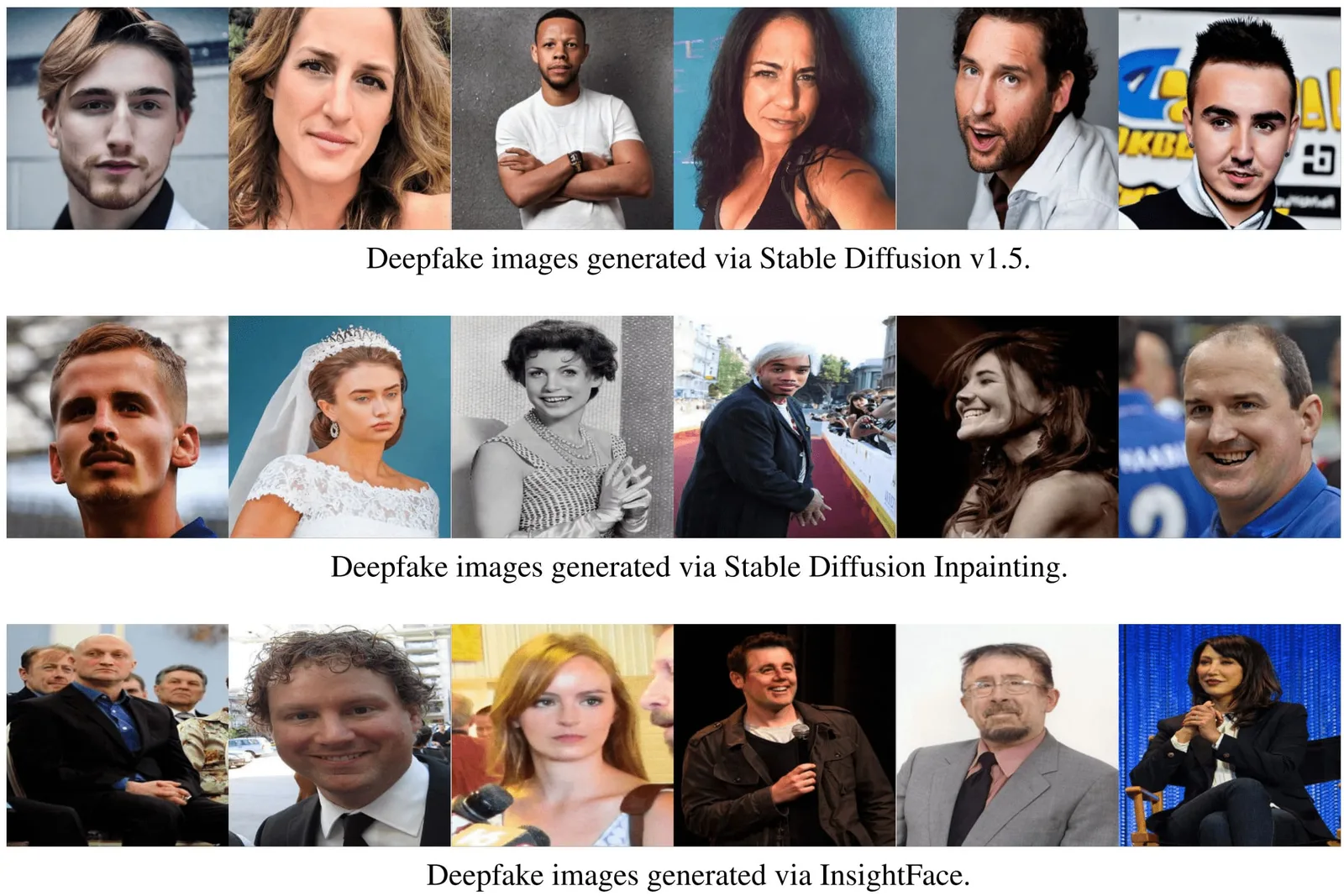
DeepFakeFace holds 120k face images: real photographs plus fakes from three diffusion pipelines (Stable Diffusion 1.5, SD Inpainting, InsightFace). We built detectors, then tried to build the generators.
Detection
The 3:1 fake/real imbalance was handled by undersampling to 10k fakes per generator. Pre-trained backbones got a new binary head; two CNNs were trained from scratch.
| Model | Test accuracy | Note |
|---|---|---|
| EfficientNet-B0 | 99.55% | Best overall, converged within 10 epochs |
| DenseNet161 | 98.85% | Dense skip connections reuse features well |
| Custom CNN (4 blocks, BN, dropout) | 98.35% | No ImageNet weights at all |
| ResNet50 | 98.70% | Adam beat SGD across every ResNet variant |
| ViT-B/16 | 93.74% | Needed a much smaller LR and batch |
| Baseline CNN (3 blocks) | 71.70% | Confidence decayed without classic overfitting |
Generation
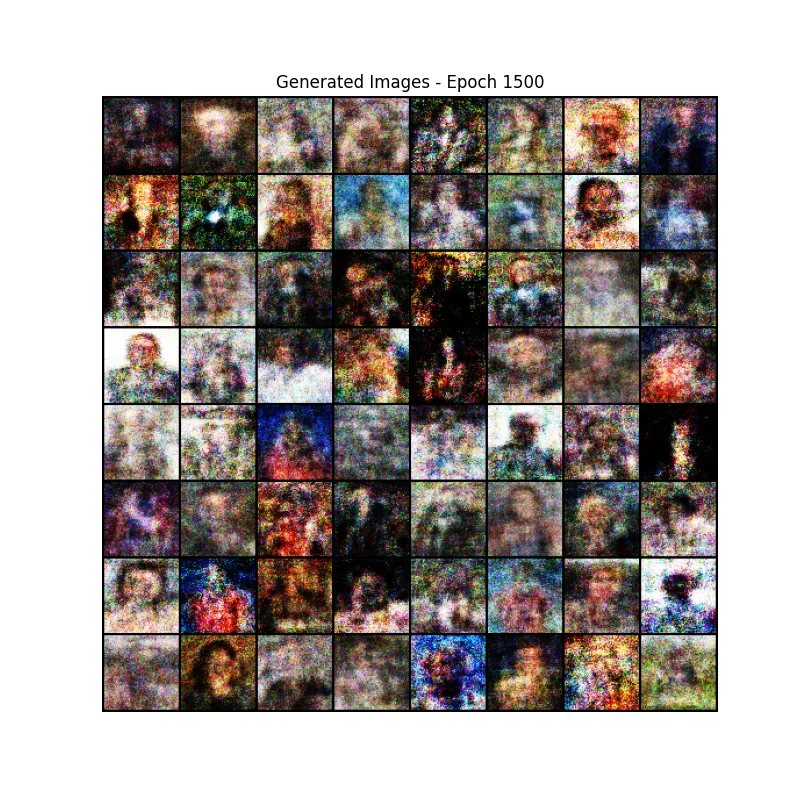
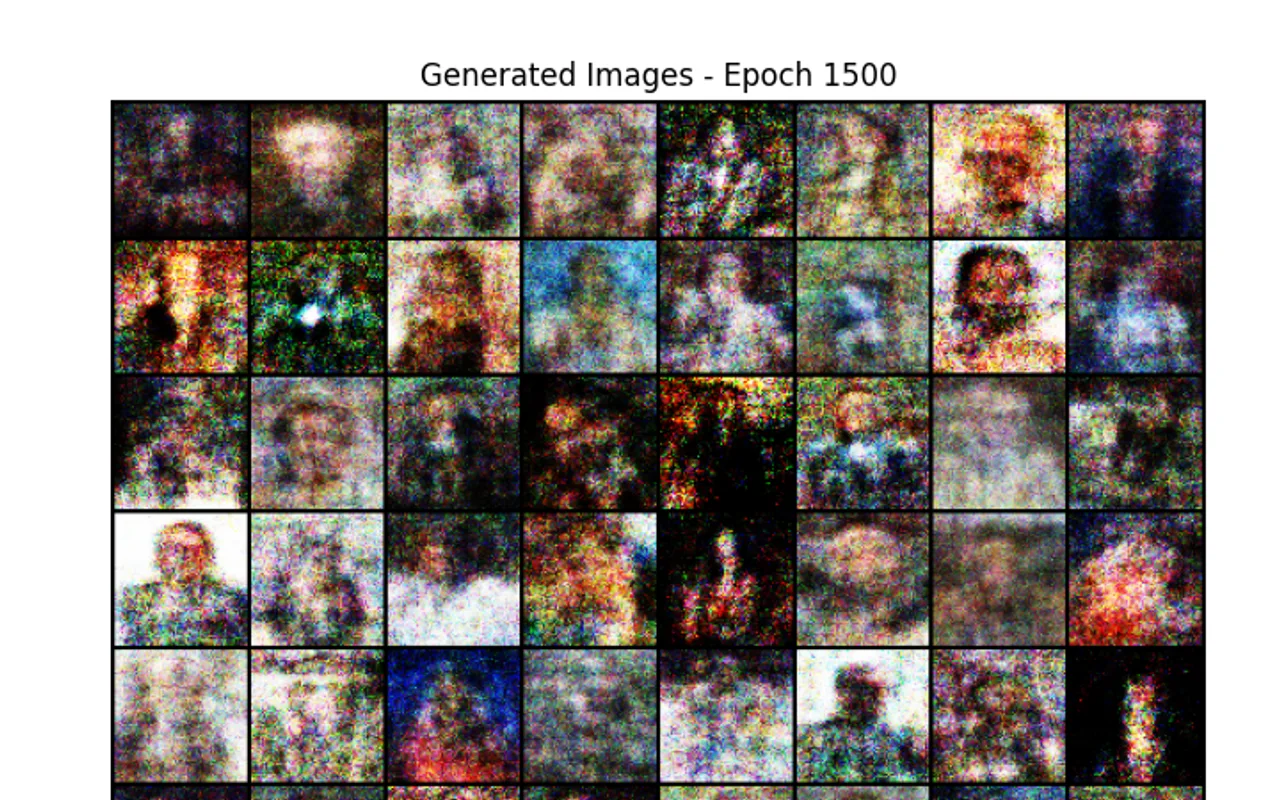
- MLP-GAN baseline: the classic volatility → equilibrium → divergence curve; after epoch 800 the discriminator wins and samples collapse into saturated noise.
- DCGAN with transposed convolutions and the paper's
N(0, 0.02)init: clearly face-like structure at 64×64. - DDPM, twice: a custom 5-level U-Net with sinusoidal time embeddings (T = 300, L1 loss, 900 epochs) gave diverse but desaturated faces; a
diffusersUNet2DModel at 128×128 with a squared-cosine schedule produced far more vivid, coherent samples after only 30 epochs, at roughly 10 GPU-hours per 30 epochs.